elementary gifted
-
Sometimes the Best Learning Is Locked: Using Breakout EDU in Grades 3–8
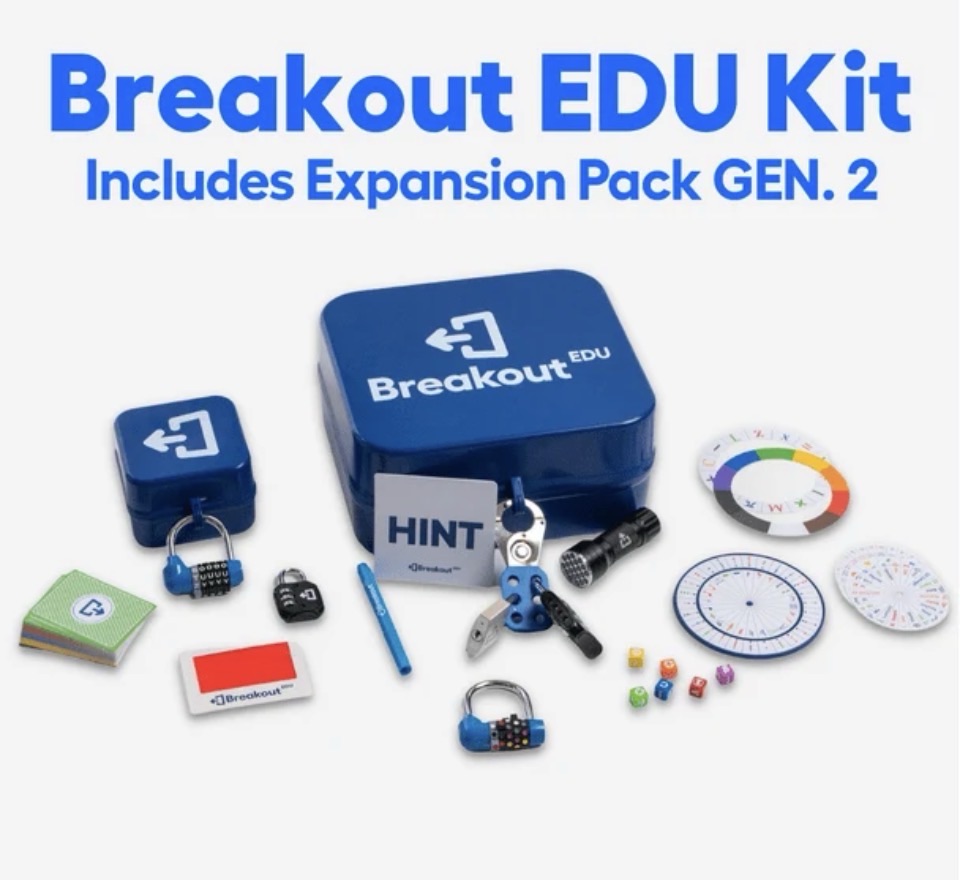
This blog post explores how Breakout EDU can transform grades 3–8 classrooms by turning academic content into engaging, collaborative problem-solving experiences. It highlights how Breakout EDU supports critical thinking, productive struggle, communication, perseverance, differentiation, and student reflection across subjects like math, reading, science, and social studies. The post also encourages teachers to move students from…
-
Every Drop Counts: Exploring New Mexico’s Water Resources in the Global Innovation Lab 💧🌵
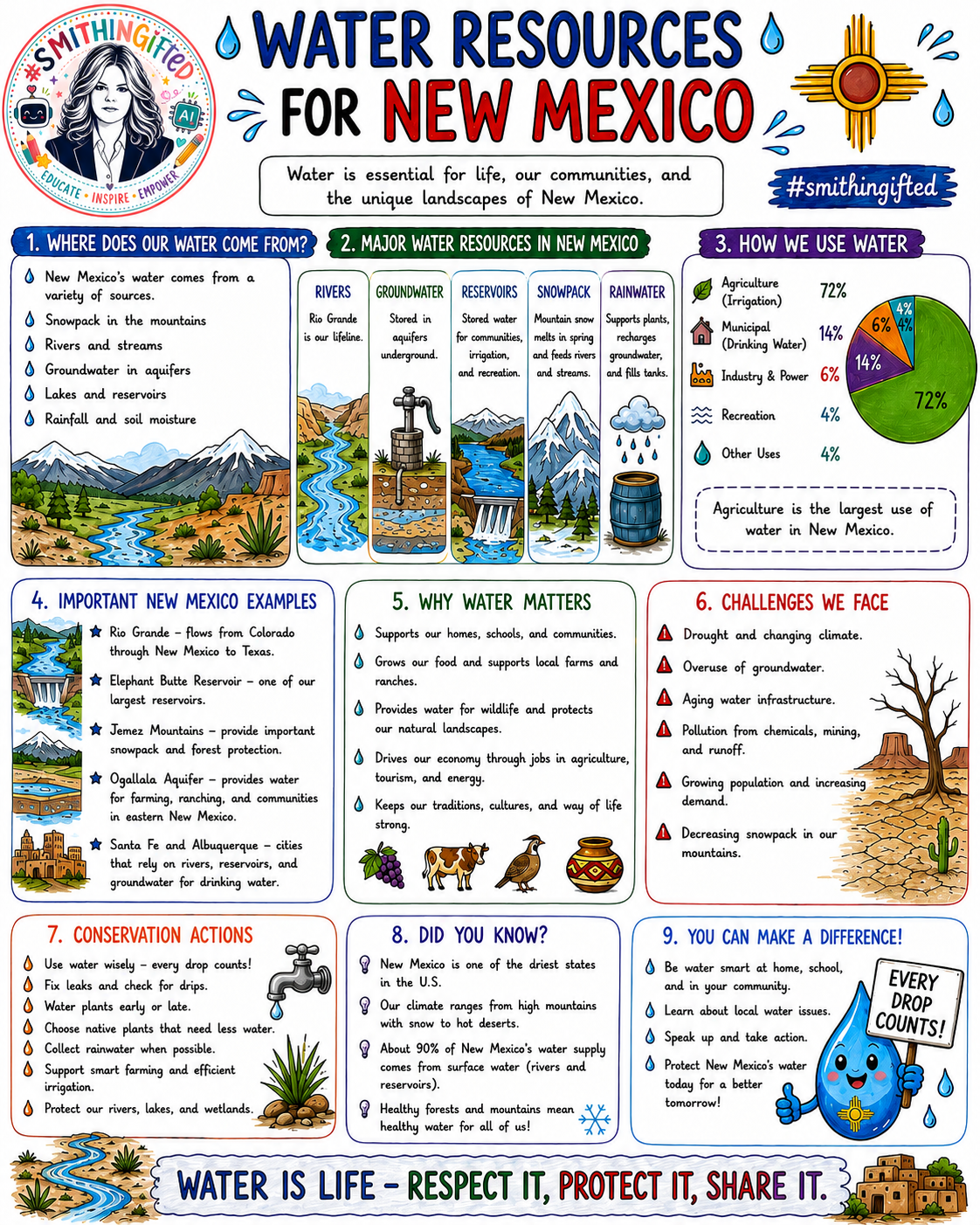
This blog post explores New Mexico’s water resources through The Global Innovation Lab’s Every Drop Counts challenge, helping students connect science, geography, agriculture, technology, law, and systems thinking. It also explains how the Texas v. New Mexico and Colorado Rio Grande case and the 2026 Supreme Court settlement affect groundwater use, farming, communities, industry, and…
-
Snap Circuits Jr. in the Gifted Classroom: Where Curiosity Meets Circuitry ⚡🧠

Snap Circuits Jr. is more than a fun electronics kit—it’s a powerful tool for building critical thinking, problem solving, creativity, systems thinking, and perseverance in the gifted classroom. ⚡🧠 By moving students beyond simply following directions and challenging them to predict, troubleshoot, redesign, and invent their own circuits, teachers can transform hands-on STEM play into…
-
📚 DIBELS and Gifted Students: What the Scores Tell Us—and What They Don’t

This post explains why DIBELS can be a helpful reading assessment for gifted students, but should never be used as the only measure of their ability or instructional needs. Gifted students may quickly reach the assessment ceiling, show uneven results, or need more advanced reading opportunities beyond grade-level benchmarks. The key is to use DIBELS…
-
🍎 Back-to-School Is More Than School Supplies—It’s Time to Build Thinkers
Start the school year by inspiring curiosity, creativity, and critical thinking! This post shares how #smithingifted transforms the classroom into an Innovation Lab where gifted learners explore STEM, robotics, coding, inquiry, and real-world problem-solving. Discover how fostering collaboration, growth mindset, and student agency creates a classroom where every child is empowered to think bigger, create…
-
How Socratic Seminars Turn Classroom Conversations Into Deeper Learning

Socratic Seminars help students become stronger thinkers, listeners, and communicators by encouraging evidence-based discussion, respectful disagreement, and deeper questioning. This blog explores practical ways to use Socratic Seminars across subjects and introduces the #smithingifted Socratic Seminar Ultimate Growing Bundle for grades 3–8.
-
FarmBeats for Students: Hands-On Agriculture STEM with micro:bit (Grades 3–8)

Discover how FarmBeats for Students and the BBC micro:bit bring agriculture, coding, and engineering together through engaging, hands-on STEM activities. This blog explores how students can collect real-world data, solve authentic farming challenges, and develop critical thinking, problem-solving, and computational skills while preparing for the careers of tomorrow. Perfect for teachers looking to make STEM…
-
What Makes a Great Thinker? Helping Gifted Students Build Minds That Last
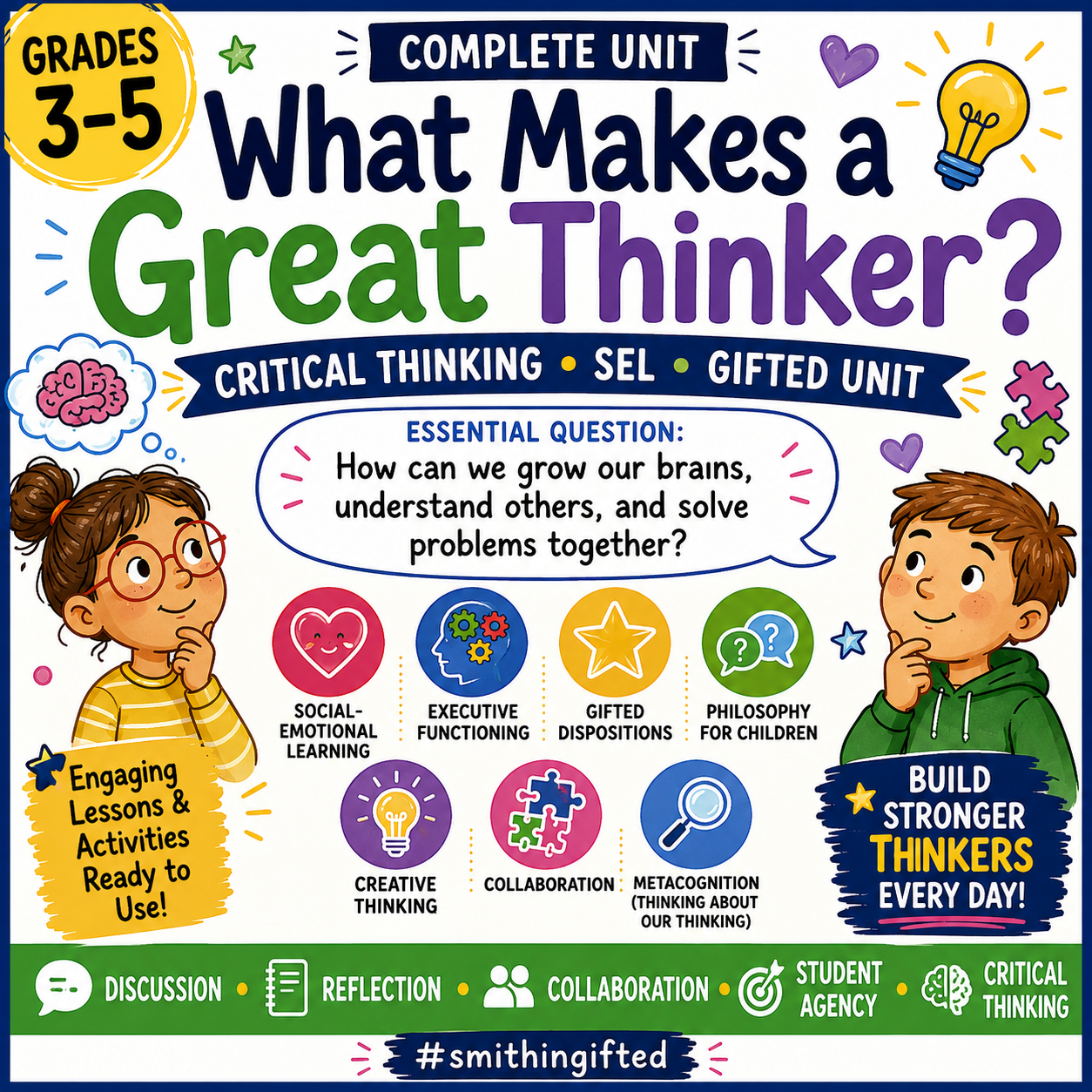
Discover why teaching students how to think is just as important as teaching them what to think. This post explores how social-emotional learning, critical thinking, and Philosophy for Children (P4C) help gifted and advanced learners build curiosity, resilience, empathy, and problem-solving skills. Learn how What Makes a Great Thinker? empowers students to ask meaningful questions,…
-
The Best Listening Activity for 3rd–5th Grade Gifted Students? Podcasts! 🎧
Discover how the Six Minutes podcast can transform your gifted classroom into an engaging hub for critical thinking, close listening, and rich discussion. This blog explores how the mystery-filled storyline promotes inference, evidence-based reasoning, vocabulary development, and collaborative problem-solving while keeping students excited to learn. You’ll also find ideas for integrating listening journals, discussion prompts,…
-
Socratic Seminars for 3–5th Grade Gifted Students
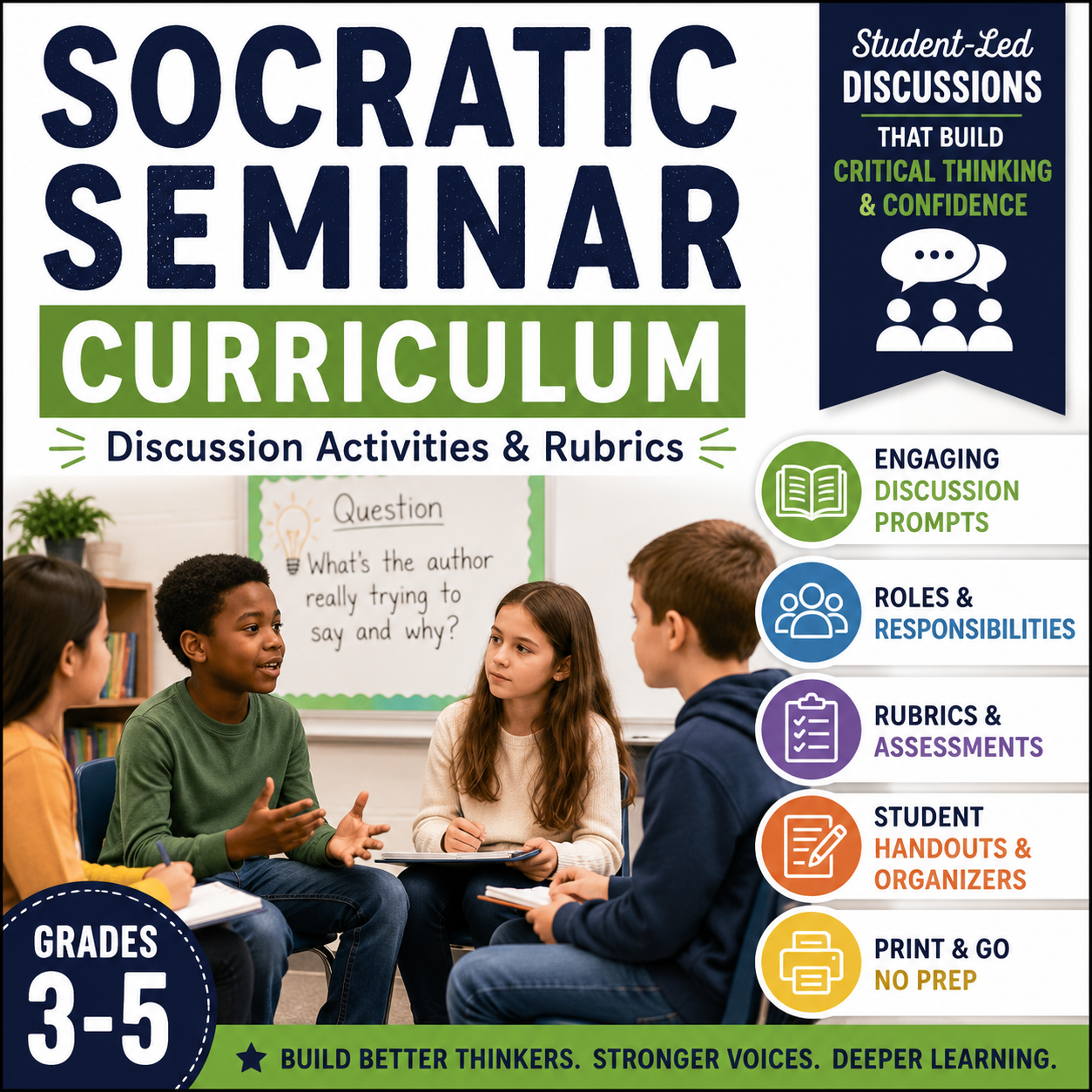
Socratic Seminars help gifted students move beyond simply finding the right answer to asking deeper questions, defending their thinking with evidence, and respectfully engaging with different perspectives. In this post, discover practical strategies for implementing meaningful Socratic Seminars in a 3rd–5th grade gifted classroom while fostering critical thinking, collaboration, communication, and student-led discussion. 📚💬✨