By Beth Smith, M. Ed. | #smithingifted
There are certain classroom activities that look simple at first glance but pack in an incredible amount of thinking.
The 24 Game is one of them.
Give students four numbers and one goal:
Make 24.
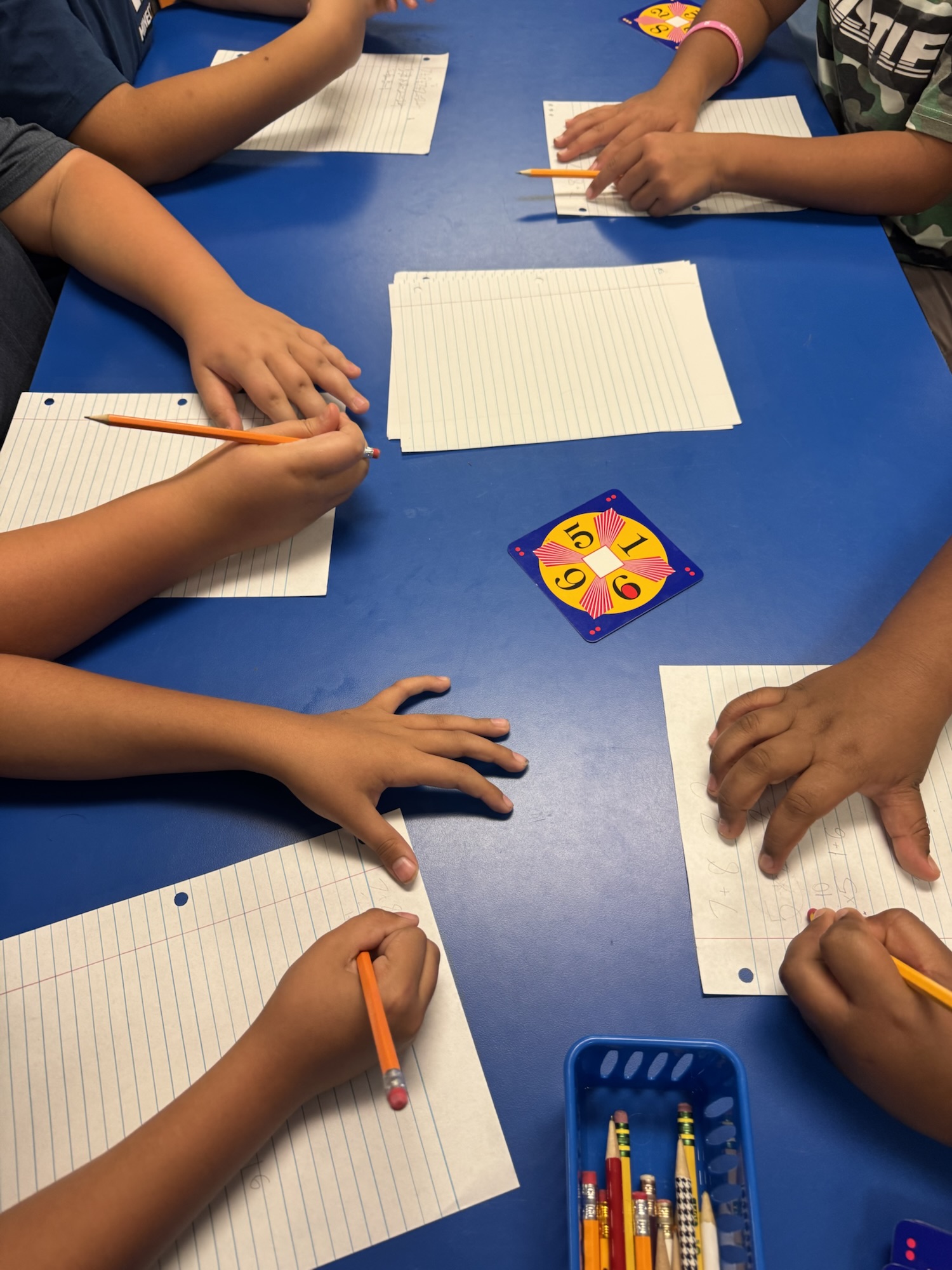
Students can use addition, subtraction, multiplication, and division to combine the four numbers. Each number must be used, and the challenge is figuring out how to make the numbers work together to equal 24.
It sounds simple.
Until it isn’t. 😄
That is exactly why I love using the 24 Math Game with my 3rd–5th grade gifted students.

🧠 1. It Turns Computation Into Problem Solving
I don’t want my gifted students simply practicing multiplication facts faster.
I want them asking:
- What do I notice?
- What combinations could work?
- What happens if I start with multiplication instead of addition?
- Can I work backward from 24?
- Is there another solution?
- Why didn’t my first strategy work?
The 24 Game takes basic operations and turns them into a mathematical puzzle.
Instead of completing a page of computation problems, students have a reason to manipulate numbers, recognize relationships, and experiment with different possibilities.
That’s much closer to authentic mathematical thinking.
🔎 2. Students Begin Seeing Numbers Differently
One of my favorite things to watch is the moment students stop looking at the four numbers as four separate numbers.
They start seeing relationships.
They might notice:
6 × 4 = 24
or
3 × 8 = 24
or
12 × 2 = 24
or
24 ÷ 1 = 24
Suddenly they are thinking:
“How can I turn these numbers into a 6 and a 4?”
That shift is huge.
Students are developing number sense, flexibility, and strategic thinking instead of relying on one memorized procedure.
♟️ 3. There Isn’t Always an Obvious Path
Gifted students are often very comfortable when they know exactly what to do.
Give them an algorithm?
They can fly through it.
Give them a problem where the pathway isn’t obvious?
Now we get to work on something entirely different.
Productive struggle.
With the 24 Game, students may try one solution.
It doesn’t work.
They try another.
Still doesn’t work.
They rearrange the numbers.
They work backward.
They ask a partner.
They start over.
And eventually…
“WAIT! I GOT IT!”
That moment is powerful because the success came from persistence, not speed.
➕ 4. It Encourages Flexible Mathematical Thinking
One of my favorite questions to ask after a student finds a solution is:
“Can you find another way?”
The first answer isn’t necessarily the end of the problem.
Now the challenge becomes:
- Can you find two solutions?
- Can you find three?
- Can you solve it using division?
- Can you solve it without multiplication?
- Can you write the entire solution as one expression?
- Can you prove your solution works?
Gifted students need opportunities to move beyond “I got the answer.”
I want them thinking:
“What else can I discover?”
🗣️ 5. They Have to Defend Their Answer—and Everyone Else Has to Check It
This may be one of my favorite parts of using the 24 Game.
A student can’t just yell:
“I got 24!”
They have to prove it.
They have to explain exactly how they used the four numbers, which operations they chose, and the order in which they completed the calculations.
Meanwhile, the rest of the group has an equally important job:
Check the work.
I love watching the students listen carefully while another student explains a solution.
They are mentally calculating along with them.
They are checking whether every number was used.
They are checking the operations.
They are checking the order of operations.
They are deciding:
Does this solution actually work?
If they disagree, they can’t simply say:
“That’s wrong.”
They need to explain where the reasoning went wrong.
That creates such a powerful shift in the classroom.
The student sharing the solution becomes responsible for defending mathematical reasoning, while the other students become the mathematicians who must analyze, verify, question, and critique the work.
Everyone is thinking—even when only one student is explaining.
And sometimes the best moment is when a student confidently presents a solution and another student says:
“Wait. Check that second step.”
Now we have real mathematical discourse happening.
I want my gifted students to understand that in mathematics, an answer isn’t enough.
You should be able to defend your thinking.
And if someone else presents a solution, you shouldn’t automatically assume it is correct.
You should be able to check the evidence for yourself.
That is a skill that goes far beyond the 24 Game.
💬 6. It Creates Great Math Conversations
The 24 Game is surprisingly social.
Students naturally begin comparing strategies.
One student might say:
“I multiplied these two first.”
Another says:
“I divided first!”
Suddenly we have students discussing mathematical reasoning without me having to force the conversation.
I can ask:
Which strategies were different?
Where did the two solutions take different paths?
Would both strategies work if one number changed?
Which operation was the key to solving this card?
Can anyone find an error in this reasoning?
Who can defend this solution in a different way?
Now a five-minute math game has turned into a mathematical discussion.
🎯 7. It Is Easy to Differentiate
This may be another reason I love it so much.
The same game can work with students at very different readiness levels.
3rd Grade
My third graders may begin by concentrating on:
- addition
- subtraction
- multiplication
- basic fact fluency
- trying different number combinations
- verbally explaining how they reached 24
I want them becoming comfortable experimenting with numbers and explaining their thinking.
4th Grade
My fourth graders can begin thinking more strategically:
- using all four operations
- using parentheses
- creating multi-step expressions
- explaining their strategy
- checking a classmate’s reasoning
- finding more than one solution
5th Grade
My fifth graders can take the game even further:
- solve mentally before writing
- find multiple solutions
- compare different strategies
- identify errors in another solution
- create their own 24 challenges
- defend why a strategy works
- analyze whether a card could have additional solutions
The numbers may stay the same.
The depth of thinking changes.
That is exactly what differentiation should look like.
🏆 8. Speed Doesn’t Have to Be the Goal
Yes, students can compete.
And yes, some of my students absolutely love racing to find 24 first.
But I don’t want speed to become the only definition of mathematical ability.
Sometimes I give students a card and say:
“Don’t give me the fastest solution. Give me the most interesting solution.”
That completely changes the challenge.
Another option:
Find as many solutions as possible in five minutes.
Or:
Everyone must solve the card before anyone reveals an answer.
Or:
One student presents the solution while everyone else checks it for accuracy.
Now students who are deeper thinkers, careful checkers, strong explainers, or creative problem solvers have an opportunity to shine too.

💡 9. Students Can Create Their Own 24 Cards
Once students understand the game, I love flipping the challenge.
Instead of solving a card, they become the game designer.
I might tell them:
Create four numbers that can make 24.
Then:
Create a card with at least TWO different solutions.
And eventually:
Create a card you think will stump your classmates.
Now students have to work backward.
They must create a solution, determine which numbers are required, test their card, and decide whether the difficulty level is appropriate.
Then their classmates get to solve it—and check whether the creator’s intended solution really works.
Now we have moved from solving into creating, testing, defending, and revising.
And that is where gifted learning gets really interesting.
🔥 Try These 24 Game Challenge Levels
I love adding small challenges to keep the game fresh.
Level 1: Find one solution.
Level 2: Find two different solutions.
Level 3: Solve without using addition.
Level 4: Solve using division somewhere in your solution.
Level 5: Write your solution as one mathematical expression.
Level 6: Explain and defend why your solution works.
Level 7: Check another student’s solution and identify any errors.
Level 8: Create a new set of four numbers that makes 24.
Level 9: Create a card with multiple solutions.
Level 10: Create a card designed to stump the teacher. 😏
That final challenge usually gets their attention.
❤️ Why 24 Has Earned a Place in My Gifted Classroom
The 24 Game doesn’t require a complicated setup.
It doesn’t require a 45-minute lesson.
But in just a few minutes, students can practice:
➕ Computational fluency
🧠 Number sense
🔎 Pattern recognition
♟️ Strategic thinking
💪 Productive struggle
🗣️ Mathematical communication
🧐 Error analysis
✅ Peer verification
⚖️ Defending mathematical reasoning
🔄 Flexible thinking
✨ Creativity
And perhaps most importantly, students begin learning that mathematics isn’t always about following a procedure or being the first person to shout out an answer.
Sometimes mathematics is about playing with possibilities, defending your reasoning, listening to someone else’s strategy, and checking whether the evidence actually supports the answer.
That is the kind of thinking I want happening in my gifted classroom.
Because when my students see four numbers, I don’t want them asking:
“What am I supposed to do?”
I want them asking:
“What could I try?”
And when another student says, “I got 24!”
I want the response to be:
“Show us. Prove it.”
That’s where some of the best mathematical thinking begins.
#smithingifted #GiftedEducation #GiftedStudents #MathEnrichment #24Game #MathGames #GiftedClassroom #ElementaryMath #MathThinking #ProductiveStruggle #NumberSense #CriticalThinking #MathDiscourse #ErrorAnalysis