Beth Smith, M. Ed. | #smithingifted
There is always that student.
You give the class an assignment that should take about 40 minutes, and within 10 minutes, one student is already finished.
Not rushed.
Not sloppy.
Actually finished.
In a traditional classroom, that student is often told to “read quietly,” “help someone else,” or “do more of the same.” While those options may work once in a while, they should not become the main plan for gifted learners.
Gifted students should not be punished for learning quickly.
They should not have to sit and wait because they processed the skill faster. They should not be given extra busy work just because they are capable. And they should not be expected to slow down their own learning so everyone stays in the same place at the same time.
In the #smithingifted classroom, finishing early is not a problem.
It is an opportunity.
Gifted Learners Need Choice
Gifted students thrive when they have meaningful choices. Choice gives students ownership. It helps them understand that learning is not just something being assigned to them — it is something they are building for themselves.
In my classroom, students are not all working on the same thing at the same time every day. They may be working through coding, robotics, research, STEM design, Google tools, entrepreneurship, chess, math challenges, or creative problem-solving activities.
The goal is not chaos.
The goal is intentional independence.
Students learn how to choose work that matches their interests, strengths, goals, and readiness levels. They learn to ask:
What am I ready for next?
What skill do I need to build?
How can I challenge myself?
How can I show what I know in a new way?
That kind of thinking is powerful.
When gifted students have choice, they are more engaged because the learning feels connected to them. They are not simply completing assignments. They are building a learning pathway.
Gifted Learners Need Pace
One of the biggest challenges in a gifted classroom is pacing.
Some students need more time to think deeply, revise, troubleshoot, or practice a new skill. Other students move quickly and are ready for the next challenge almost immediately.
Both students deserve what they need.
That is why flexible pacing is such an important part of the #smithingifted curriculum. My curriculum is built across four nine weeks over three years, giving students time to grow through different pathways while still allowing them to move forward when they are ready.
When a student finishes a task, they do not have to wait for the entire class to finish before they can continue learning. They can move to the next level, begin an extension, work on a portfolio piece, earn a badge, or choose a new challenge.
This matters because gifted education should not be about holding students back until everyone is in the same place.
It should be about helping every student move forward from where they are.
Gifted Learners Need Purpose
Choice and pace are important, but they are not enough by themselves.
Gifted students also need purpose.
They need to know why the work matters. They need opportunities to create, solve, build, design, research, explain, and lead. They need assignments that go beyond “finish this worksheet” and move toward “use what you know to make something meaningful.”
That is where STEM, robotics, coding, research, creativity, and real-world problem solving become so valuable.
When students are building a robot, coding a project, designing a solution, creating a spreadsheet, researching a real issue, or preparing a product for their portfolio, the assignment has purpose. It is not just about getting done. It is about growing as a thinker.
In the #smithingifted model, students earn badges after levels because badges represent progress, mastery, and persistence. They are not just decorations. They are evidence of growth.
Students can look back and say:
I learned that skill.
I solved that problem.
I created that project.
I moved forward.
That kind of reflection helps students see themselves as capable, independent learners.
What This Looks Like in the Classroom
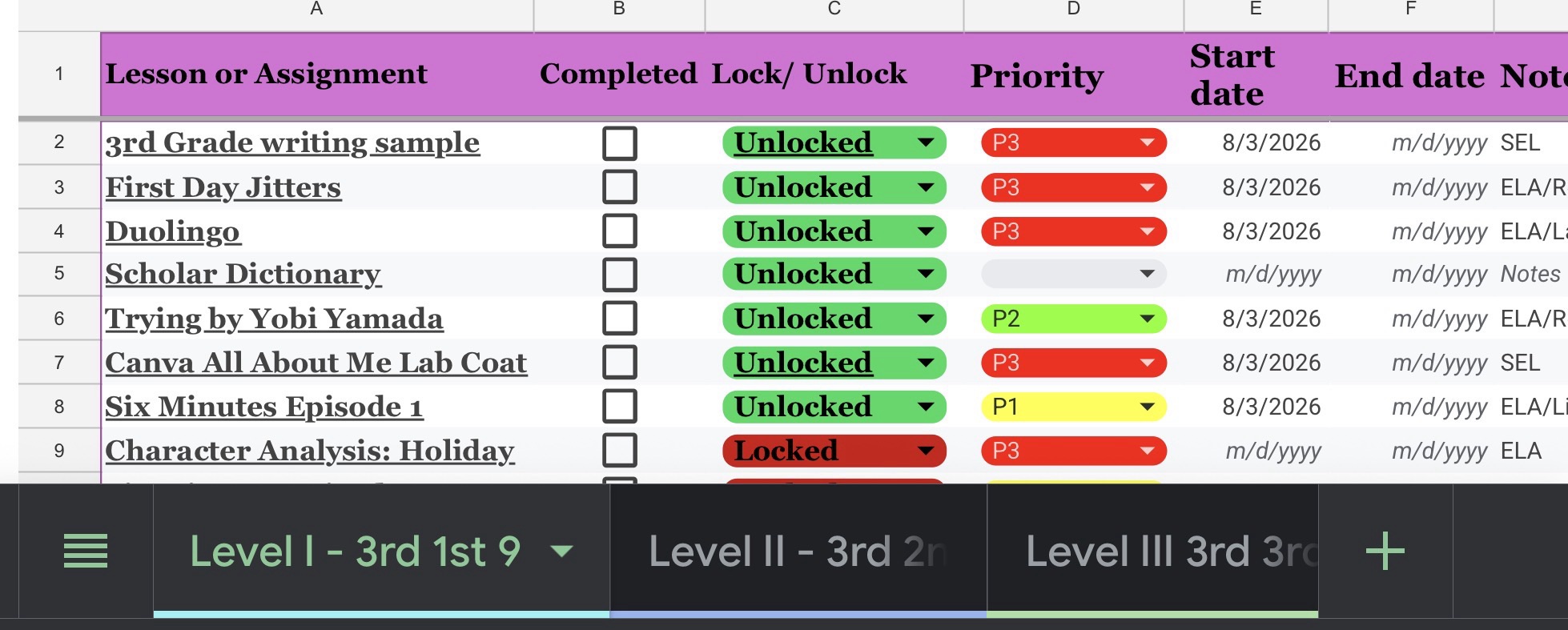
A great example is when my students work on a Google Sheets assignment for Battle of the Books.
Some students catch on quickly. They understand how to organize the data, format the sheet, sort information, and complete the task. Other students need more support. They may need help remembering where tools are, how to format columns, or how to organize their thinking.
In a traditional system, the fast finishers might have to wait.
In my classroom, they move forward.
They might go to the next Google Sheets challenge. They might add charts or graphs. They might create a book tracker, design a team scoreboard, or turn the information into something useful for the class. They might move into an extension challenge that asks them to analyze the data instead of just organize it.
Meanwhile, the students who need more time still get the support they need without feeling rushed.
That is the power of flexible pacing.
Nobody has to wait.
Nobody has to be pushed before they are ready.
Nobody gets busy work just to stay occupied.
Everyone keeps learning.
Finishing Early Should Lead to Deeper Learning
We have to stop treating fast finishers like classroom management problems.
A student who finishes early is showing us something. They may be ready for more complexity, more creativity, more independence, or more depth.
The answer is not more of the same.
The answer is better.
Better questions.
Better challenges.
Better choices.
Better opportunities to think.
Gifted students need assignments that open doors instead of closing them. They need a system where finishing one task naturally leads to the next level of learning.
That is why I use pathways, badges, portfolios, and extension challenges. These structures allow students to keep moving without needing me to stop the entire class and create something new on the spot.
The system is already there.
Students know where to go next.
The #smithingifted Way
The heart of #smithingifted is simple:
Students need choice.
Students need pace.
Students need purpose.
They need the freedom to move forward, the structure to stay focused, and the challenge to keep growing.
Gifted education is not about giving students more work.
It is about giving them the right work at the right time.
It is about creating a classroom where students do not have to wait for their next assignment because the next opportunity is already waiting for them.
And when students are trusted to move forward, something powerful happens.
They stop asking, “What do I do when I’m done?”
They start asking, “What can I learn next?”


